
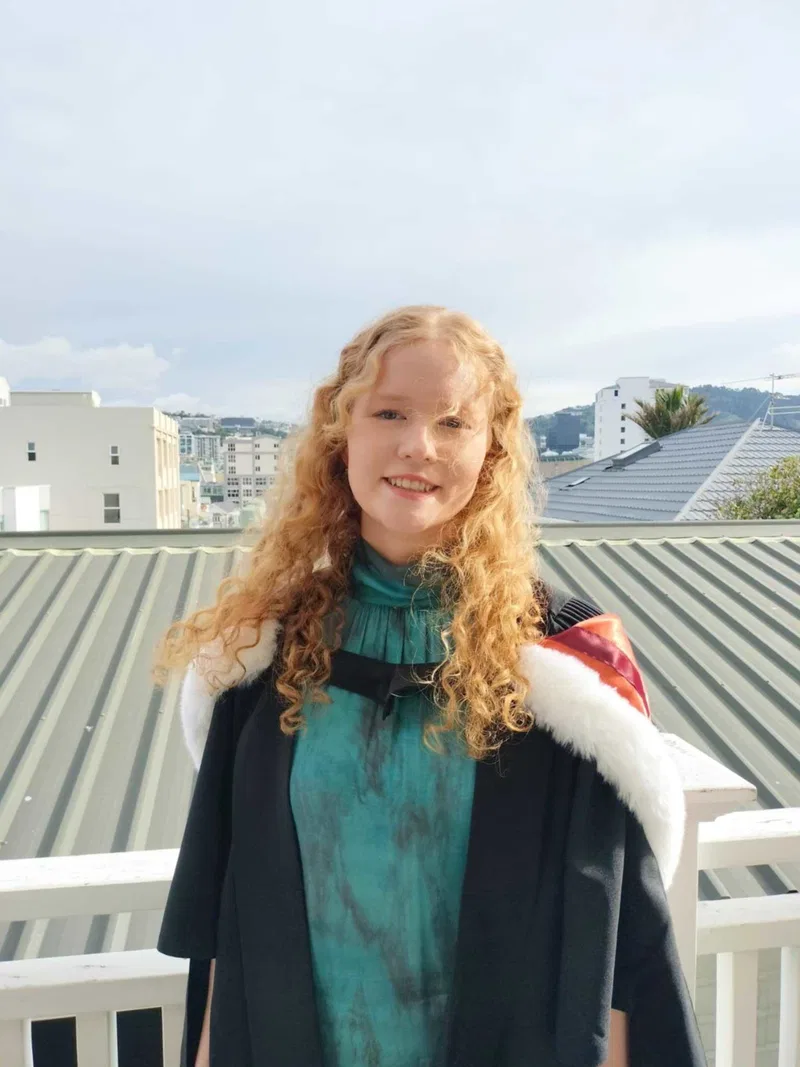
I am a Masters of Architecture (Prof) student at Victoria University of Wellington, currently working on my thesis. My thesis is 'Child Pedestrian Safety in Driveways with Urban Design Lead by Te Aranga Design Principles' as a working title. I am very inspired by environmentally considerate architecure both in public and private settings, indoor and outdoor, and have enjoyed university courses on urban design, and urban mobility also. I was born in Denmark, speak Danish and English, and am a dual citizen of New Zealand and Denmark. Here, I find inspiration in similarities and differences in history and culture.
Looking For a Mentor
I am looking for a mentor who could guide me on preparing to enter the Architecture workforce in New Zealand following my graduation as Master in Architecture (prof) at the conclusion of 2026. This could be by providing guidance on the making of a portfolio which meets the expectations of Architecture firms, instituions, companies, and others. How to establish connections in the industry, and means and strategies of continuing a learning trajectory following my thesis completion.
Showcase
Kaitiakitanga - The Sentry Bird
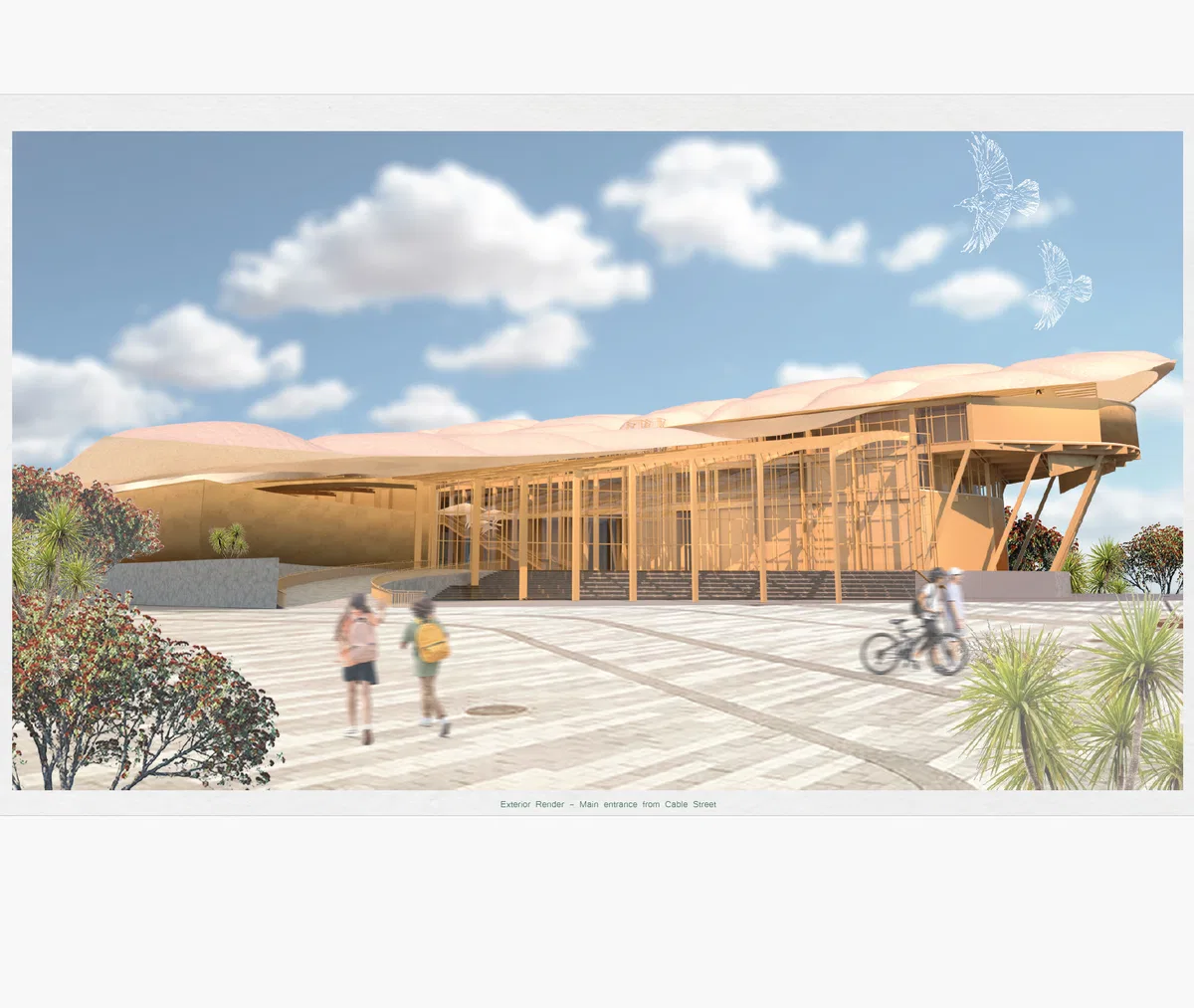
Bachelor of Architecture course project to redesign Te Papa in Wellington, New Zealand. The brief for this project was complex and particular to the many needs of a national museum for space allowance, offerings, accessibility, servicing, and services.
The design is inspired by the sentry bird.
The Sentry Bird
In a flock of birds the role of the sentry bird is to watch for and alert against predators and potential danger. This role speaks of a strength and
tenacity occuring in birds which we often forget when we are regularly faced with the reality of the devastating effects which introduced species
have on an ecosystem, its flora and its fauna.
The Te Papa Tongarewa is a trove of not just treasures of the past but a also of the present and the future. The landmark design protects and
encourages the establishment of a home for native wildlife in the capital Poneke, and should be a blueprint for the rest of Aotearoa.
The birds of Aotearoa are vibrant and unique, they have adapted strengths which enable them to thrive in the volatile climate in mountainous icy
regions, on coasts, and on the forest floors.
The birds are ancient and intelligent.
The design is inspired by the sentry bird.
The Sentry Bird
In a flock of birds the role of the sentry bird is to watch for and alert against predators and potential danger. This role speaks of a strength and
tenacity occuring in birds which we often forget when we are regularly faced with the reality of the devastating effects which introduced species
have on an ecosystem, its flora and its fauna.
The Te Papa Tongarewa is a trove of not just treasures of the past but a also of the present and the future. The landmark design protects and
encourages the establishment of a home for native wildlife in the capital Poneke, and should be a blueprint for the rest of Aotearoa.
The birds of Aotearoa are vibrant and unique, they have adapted strengths which enable them to thrive in the volatile climate in mountainous icy
regions, on coasts, and on the forest floors.
The birds are ancient and intelligent.
Year of Completition
2024
Type
Bachelor of Architecture course design project
Role
Principal of Solo Project
Eye / I of the City
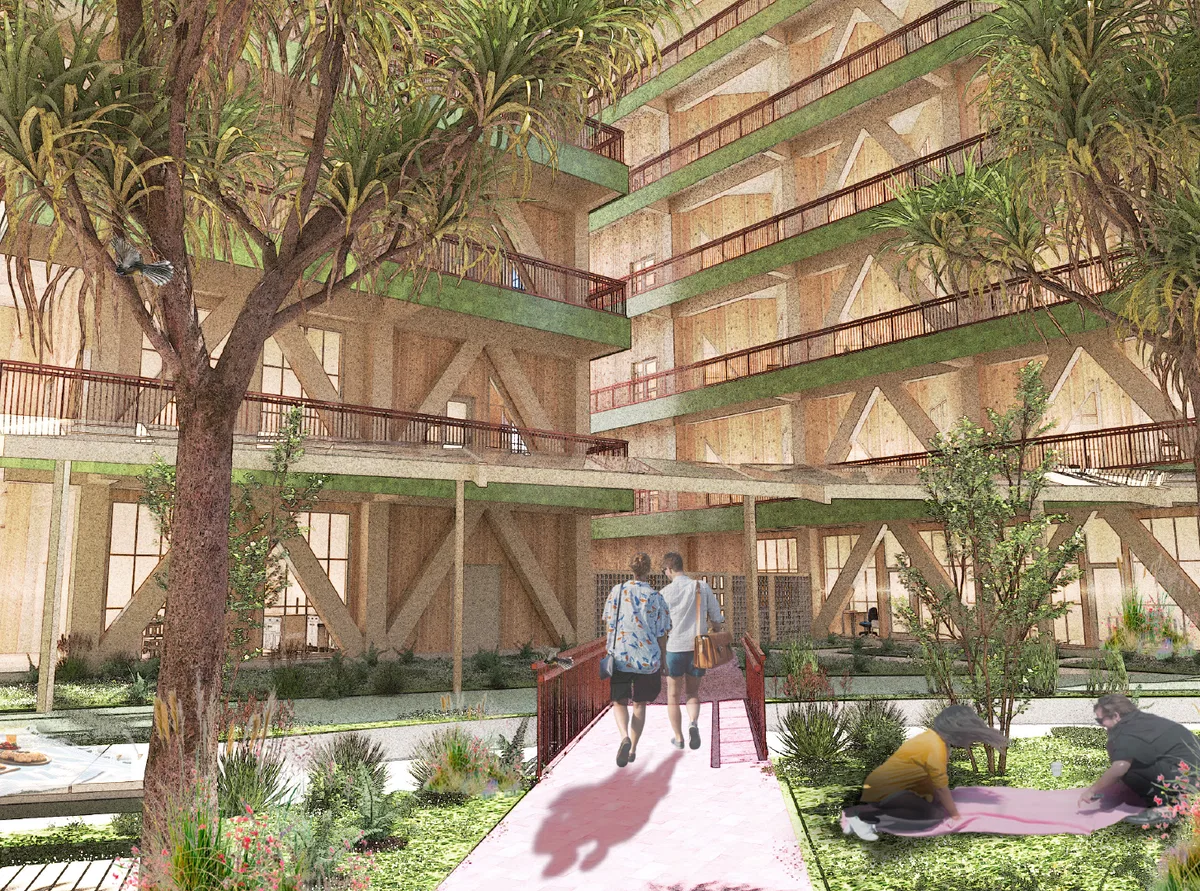
The project aims to shift the cities perception of self by recreating and re-imagining a barren carpark to be a mixed use residential building site clustered around a lush central park accessible as a public spatial offering. As an offering of Manaakitanga, a showing respect and generosity, surrounding the park at ground level are free activities, services, and amenities. These inlcude a library space, Everybody Eats, Community Law, public restroom and shower, and Sustainability Trust. These offerings will invite the public, guests, and residents, into the site on a non-commercial basis. The shared rooftop amenities aimed for will also address the commercialisation and gentrification of the top floor. The best view and light access is available to all tenants and building occupants, and in the detailed development and resolution of the design Whakawhanaungatanga Maori Wellbeing Model for Housing and Urban Environments, will be consulted with as a resource, alongside the Tupika Ora Maori Strategy, which will also address the public thoroughfare to be a space which further addresses values of Mauri - the health of the people for the greater good.
Spatial sequence, threshold and materiality are controlled and addressed by both the central courtyard green space acting as a rain-garden and bio-swell, which leads the user and guest through the site as a changing and captivating space. The thoroughfare is a means of convenience, invitation, and inclusion, acting as a podium for taiao (nature), in particular, native flora and fauna is fostered here, and takes on a role of kaitiaki (guardian) of native taonga (treasure). Through materiality, colour, and intentional detailing exposed timber structure, red ochre, and embedding of green tile and terrazzo identity in the design is reinforced with purpose of framing and highlighting spaces where residents and guests will move and be perceived.
The project enriches its surroundings with reinforced presence of people and nature, by making both visible in their transition through space. Thoroughfare of the site alongside the expression of a flowing bio-swell rain-garden is both unique and radical to an apartment complex. By inviting the public to such a space we can change aspects of the broader perception, presence, and performance of Wellington Central.
Spatial sequence, threshold and materiality are controlled and addressed by both the central courtyard green space acting as a rain-garden and bio-swell, which leads the user and guest through the site as a changing and captivating space. The thoroughfare is a means of convenience, invitation, and inclusion, acting as a podium for taiao (nature), in particular, native flora and fauna is fostered here, and takes on a role of kaitiaki (guardian) of native taonga (treasure). Through materiality, colour, and intentional detailing exposed timber structure, red ochre, and embedding of green tile and terrazzo identity in the design is reinforced with purpose of framing and highlighting spaces where residents and guests will move and be perceived.
The project enriches its surroundings with reinforced presence of people and nature, by making both visible in their transition through space. Thoroughfare of the site alongside the expression of a flowing bio-swell rain-garden is both unique and radical to an apartment complex. By inviting the public to such a space we can change aspects of the broader perception, presence, and performance of Wellington Central.
Year of Completition
2025
Type
Masters of Architecture (Prof) course design project
Role
Principal of Solo project
In Association With











Join our newsletter