


Diana brings over thirteen years of experience across projects ranging from small alterations to large commercial developments. Since moving from Canada to New Zealand in 2019, she has led interior architectural projects at JTB, where she leads the national interior design division. Outside of work, she enjoys tramping, sea swimming, and trail running.
Looking For a Mentor
I’m seeking a mentor who is a woman—ideally someone who is also a mother—and has navigated the challenge of leading teams while balancing the demands of parenthood. I’d value guidance from someone who has built credibility in a predominantly male industry and understands the dynamics of management, team leadership, and human resourcing. Someone who has won projects, built a strong reputation, and can speak candidly about the realities behind that success. I’m looking for insight, honesty, and practical wisdom from someone who has lived this path and can help me grow along my own.
Showcase
Nelson Building Society
Established in 1862, the Nelson Building
Society has maintained its flagship branch
at Trafalgar Street in Nelson since 1910.
Following the growth and evolution of the
company, the Society was seeking to modernise
and increase available workspace.
Taking a reuse approach to minimise
environmental impact, the interior 415m²
layout was re-configured and an additional
85m² added through the extension of
the first floor into unused atrium space.
Interior materials were removed for reuse
where possible.
Acoustics were a major component of this
project; noise levels in the busy reception
space and open plan workspaces are
managed through the use of materials
that provided both texture and acoustic
performance. Throughout the space, wall
and ceiling panelling were designed to
incorporate lighting, acoustics and AV requirements
for a fully integrated solution.
On the new first floor, full height operable
partitions provide flexibility through
allowing for the boardroom and cafe to be
open to one another for large meetings, or
create two separate rooms.
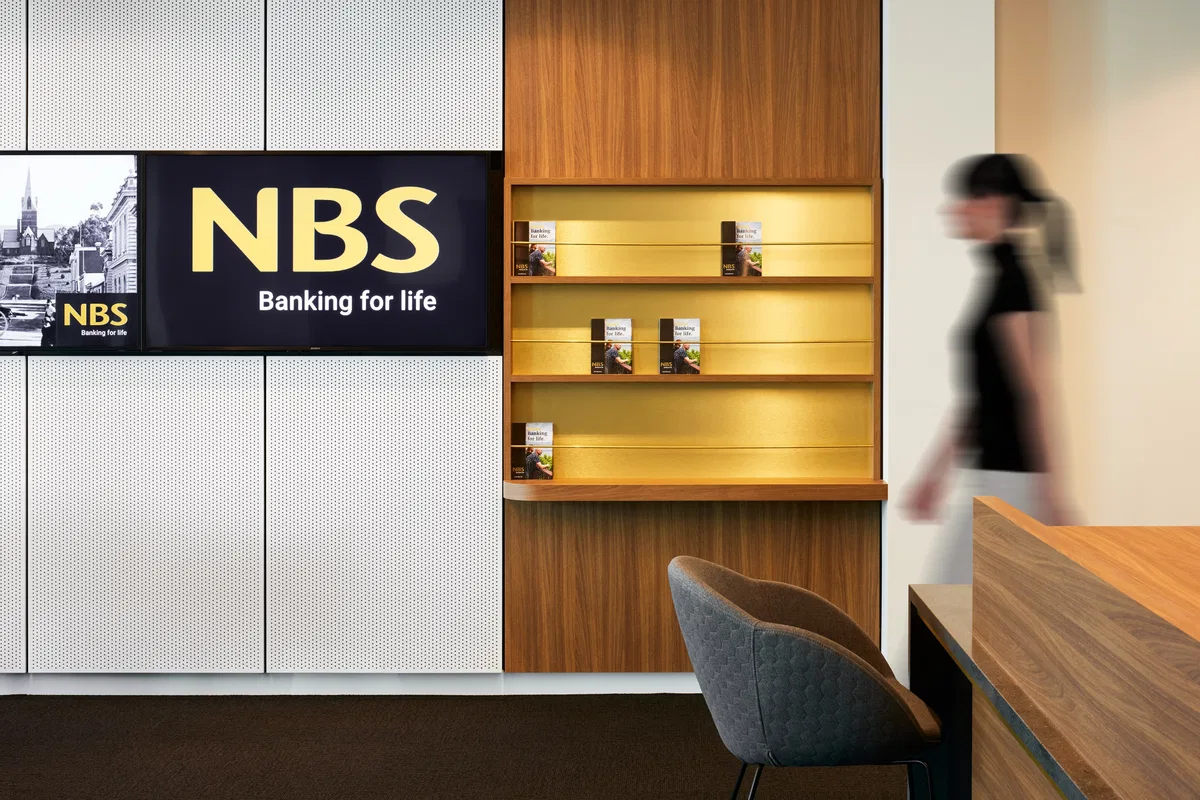
The interior palette references NBS’s
historic palette through use of brass and
warm timber, and the black and white
of archive imagery; the detailing brings
together the historic elements with a
contemporary aesthetic.
Society has maintained its flagship branch
at Trafalgar Street in Nelson since 1910.
Following the growth and evolution of the
company, the Society was seeking to modernise
and increase available workspace.
Taking a reuse approach to minimise
environmental impact, the interior 415m²
layout was re-configured and an additional
85m² added through the extension of
the first floor into unused atrium space.
Interior materials were removed for reuse
where possible.
Acoustics were a major component of this
project; noise levels in the busy reception
space and open plan workspaces are
managed through the use of materials
that provided both texture and acoustic
performance. Throughout the space, wall
and ceiling panelling were designed to
incorporate lighting, acoustics and AV requirements
for a fully integrated solution.
On the new first floor, full height operable
partitions provide flexibility through
allowing for the boardroom and cafe to be
open to one another for large meetings, or
create two separate rooms.
The interior palette references NBS’s
historic palette through use of brass and
warm timber, and the black and white
of archive imagery; the detailing brings
together the historic elements with a
contemporary aesthetic.
Year of Completition
2022
Type
Commercial, Interiors, Heritage and Reuse
Role
Project Manager, Interior Designer
Motueka River Lodge
We were engaged to develop a masterplan
for the staged redevelopment of
Motueka River Lodge, a boutique bed
and breakfast located in the Motueka
River Valley. The existing project was a
timeless design by local architect Min
Hall, and the intention was to stay true
to the original character of the architecture
while modernising the amenity
for an enhanced guest experience. The
scope of the project focused on both
interior and exterior improvements to
the existing main house, while subsequent
phases outlined plans for the
surrounding amenities and adjacent
out-buildings.
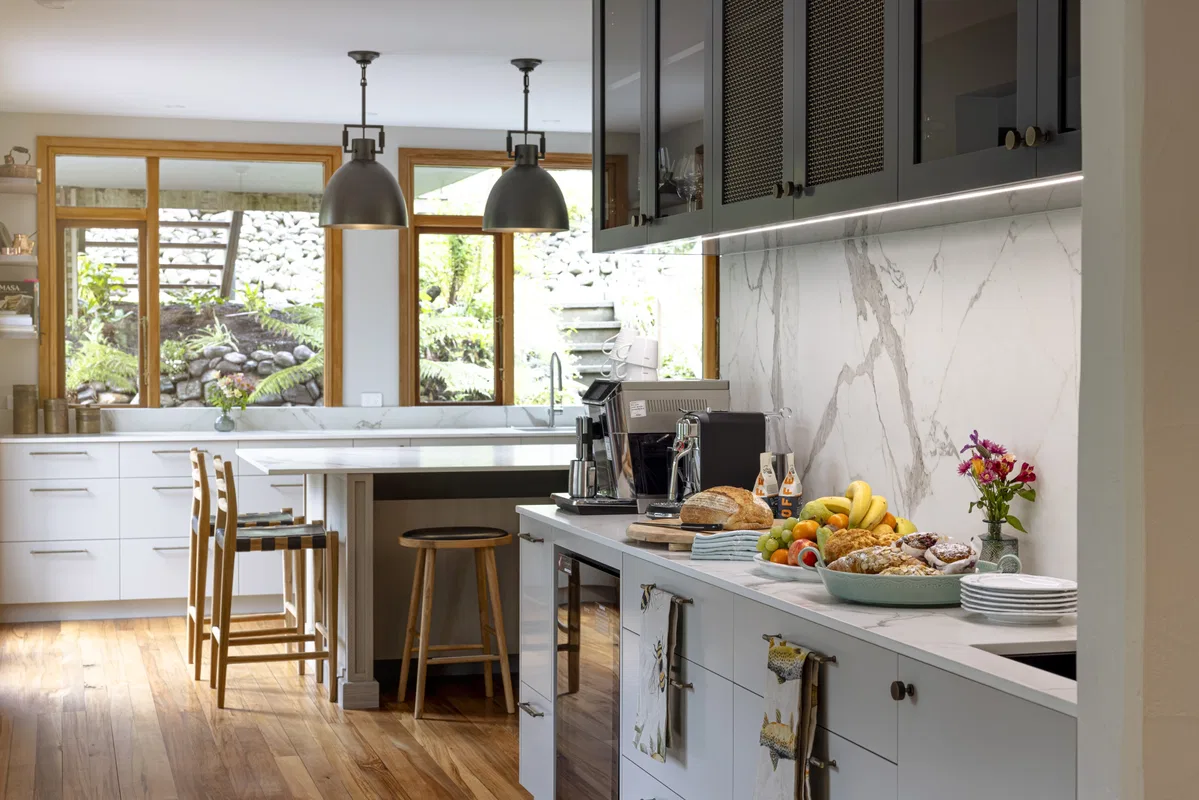
The first phase prioritised creating
an open chef’s kitchen and improving
its connection to the adjacent guest
spaces. A large central breakfast bar
was introduced, complemented by a
new scullery. The design improved the
indoor-outdoor flow, linking the kitchen
with expansive outdoor dining and living
areas. An informal lounge was created
adjacent to the kitchen, maintaining the
warmth and character of the space with
a refurbished Aga wood burner oven.
Alterations to the first floor included the
addition of a lift and the removal of a
secondary staircase to optimise circulation.
A state-of-the-art infrared sauna
room was added, and all bedrooms and
ensuites were refurbished with classic
materials and water efficient tapware.
The second phase addressed the
exterior of the main house. The exterior
palette was refreshed, with updates to
paint colours, roofing materials, and
stone cladding.
A new cantilevered deck and pergola
structure was suspended over the bush
clad gulley below, creating a seamless
outdoor experience for guests to
engage with the tranquil landscape. The
resulting architectural design coordinates
with a new landscape approach
to create a harmonious integration
between
for the staged redevelopment of
Motueka River Lodge, a boutique bed
and breakfast located in the Motueka
River Valley. The existing project was a
timeless design by local architect Min
Hall, and the intention was to stay true
to the original character of the architecture
while modernising the amenity
for an enhanced guest experience. The
scope of the project focused on both
interior and exterior improvements to
the existing main house, while subsequent
phases outlined plans for the
surrounding amenities and adjacent
out-buildings.
The first phase prioritised creating
an open chef’s kitchen and improving
its connection to the adjacent guest
spaces. A large central breakfast bar
was introduced, complemented by a
new scullery. The design improved the
indoor-outdoor flow, linking the kitchen
with expansive outdoor dining and living
areas. An informal lounge was created
adjacent to the kitchen, maintaining the
warmth and character of the space with
a refurbished Aga wood burner oven.
Alterations to the first floor included the
addition of a lift and the removal of a
secondary staircase to optimise circulation.
A state-of-the-art infrared sauna
room was added, and all bedrooms and
ensuites were refurbished with classic
materials and water efficient tapware.
The second phase addressed the
exterior of the main house. The exterior
palette was refreshed, with updates to
paint colours, roofing materials, and
stone cladding.
A new cantilevered deck and pergola
structure was suspended over the bush
clad gulley below, creating a seamless
outdoor experience for guests to
engage with the tranquil landscape. The
resulting architectural design coordinates
with a new landscape approach
to create a harmonious integration
between
Year of Completition
2024
Type
Residential, Interiors
Role
Project Manager, Interior Designer
Flow House
Flow House demonstrates the potential
of well-designed infill housing, transforming
a steep Nelson site into a compact,
sustainable home designed for a retired
couple and tailored for later life.
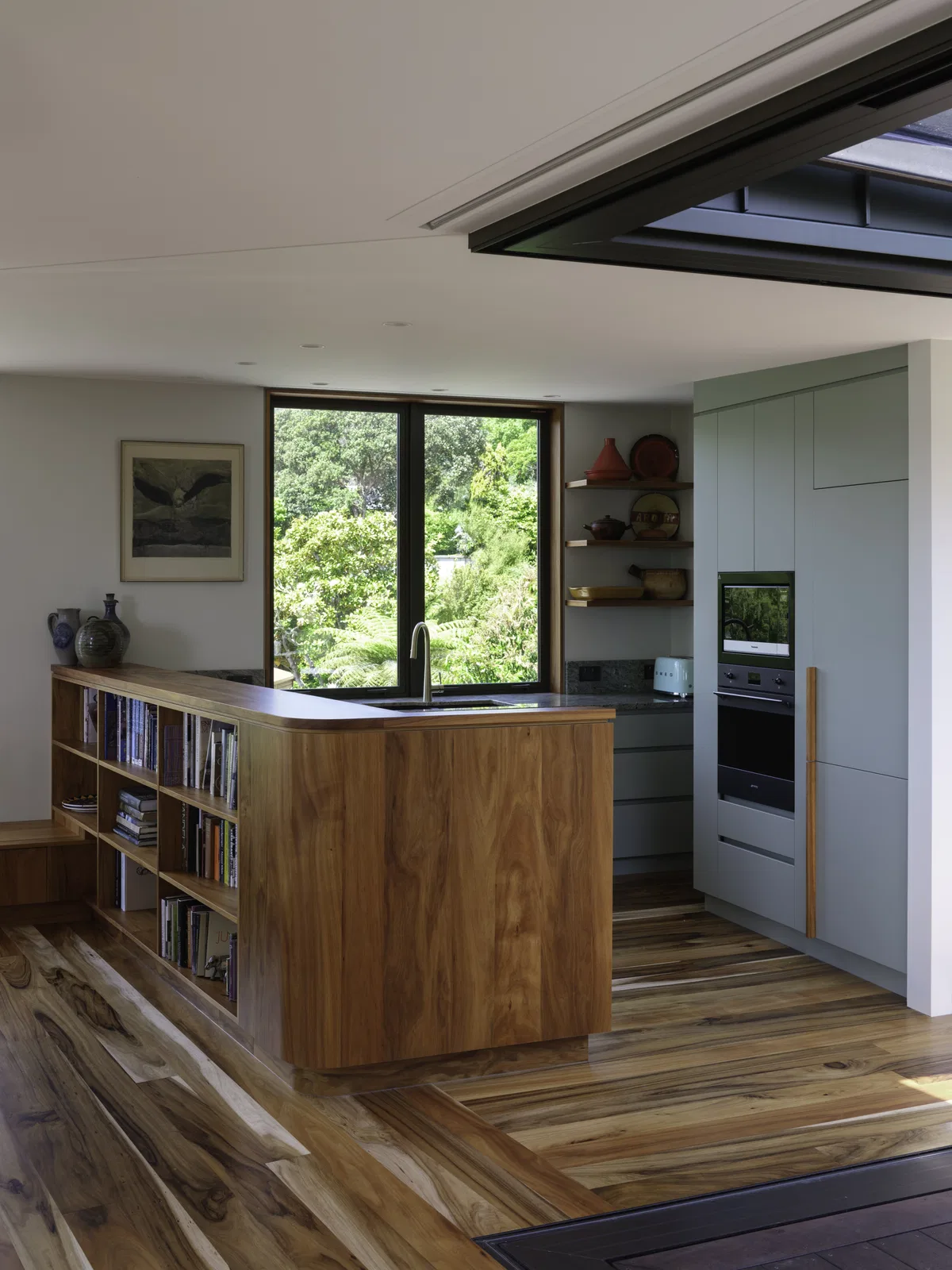
Built on a narrow, hillside infill site previously
considered unbuildable, the home
responds carefully to its urban context.
Thoughtful planning and close collaboration
with council and neighbours enabled
a low-profile design that nestles into the
slope, using curved concrete retaining
walls to integrate the house with the
landscape while maximising views and
privacy. Sustainability was central to the
design, with passive solar principles,
thermally broken windows, rainwater
harvesting, and durable materials selected
for long-term performance. Green zinc
cladding is intended to patina over time,
while locally sourced Blackbutt timber
adds warmth and resilience.
A north-facing winter garden and a central
courtyard enhance daylight, ventilation,
and thermal comfort, while creating
a strong connection to nature. Inside, a
calm material palette provides a backdrop
for the owners’ heirloom furniture,
artwork, and travel collections, resulting
in a contemporary yet deeply personal
home that demonstrates the value of
carefully considered infill housing.
of well-designed infill housing, transforming
a steep Nelson site into a compact,
sustainable home designed for a retired
couple and tailored for later life.
Built on a narrow, hillside infill site previously
considered unbuildable, the home
responds carefully to its urban context.
Thoughtful planning and close collaboration
with council and neighbours enabled
a low-profile design that nestles into the
slope, using curved concrete retaining
walls to integrate the house with the
landscape while maximising views and
privacy. Sustainability was central to the
design, with passive solar principles,
thermally broken windows, rainwater
harvesting, and durable materials selected
for long-term performance. Green zinc
cladding is intended to patina over time,
while locally sourced Blackbutt timber
adds warmth and resilience.
A north-facing winter garden and a central
courtyard enhance daylight, ventilation,
and thermal comfort, while creating
a strong connection to nature. Inside, a
calm material palette provides a backdrop
for the owners’ heirloom furniture,
artwork, and travel collections, resulting
in a contemporary yet deeply personal
home that demonstrates the value of
carefully considered infill housing.
Year of Completition
2024
Type
Residential
Role
Interior Designer
The New Zealand Wine Centre
Opened in September 2022, the New
Zealand Wine Centre - Te Pokapū Wāina
o Aotearoa, establishes a collaborative
hub for the viticulture industry,
research and education organisations
within Blenheim’s Nelson Marlborough
Institute of Technology (NMIT, now Te
Pūkenga) campus.
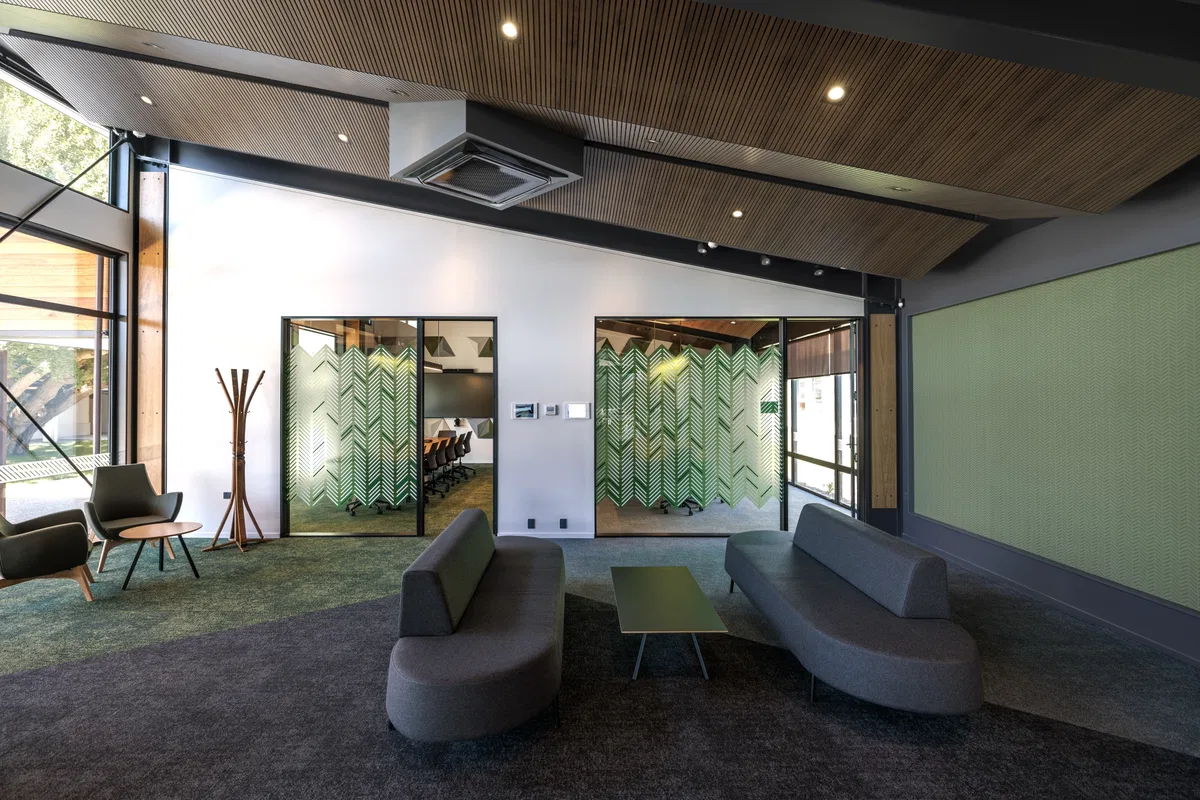
Placed in what was previously an area
occupied by prefab buildings, the
NZWC building provides formal and
informal spaces including conference
spaces, meeting rooms and a cafeteria.
Expansive glazing along the eastern
side creates a sense of openness and
connection to the redeveloped courtyard
space and surrounding campus.
Utilising steel and timber frame construction,
the Centre is clad in dark tray
metal cladding, reducing maintenance
and cost. In direct contrast to the
materials of the surrounding existing
buildings, the exterior of the structure
creates a new, harmonious language.
Soffits and post flitches for the building
are clad in Blackbutt eucalypt, in reference
to the research undertaken by
MRC to test the use of this timber as a
replacement for treated H5 timber as
posts in vineyards, with the aim of eliminating
the environmental impacts of
treated timber. On-site water treatment
systems and swales were required, due
to lack of capacity in local infrastructure.
Zealand Wine Centre - Te Pokapū Wāina
o Aotearoa, establishes a collaborative
hub for the viticulture industry,
research and education organisations
within Blenheim’s Nelson Marlborough
Institute of Technology (NMIT, now Te
Pūkenga) campus.
Placed in what was previously an area
occupied by prefab buildings, the
NZWC building provides formal and
informal spaces including conference
spaces, meeting rooms and a cafeteria.
Expansive glazing along the eastern
side creates a sense of openness and
connection to the redeveloped courtyard
space and surrounding campus.
Utilising steel and timber frame construction,
the Centre is clad in dark tray
metal cladding, reducing maintenance
and cost. In direct contrast to the
materials of the surrounding existing
buildings, the exterior of the structure
creates a new, harmonious language.
Soffits and post flitches for the building
are clad in Blackbutt eucalypt, in reference
to the research undertaken by
MRC to test the use of this timber as a
replacement for treated H5 timber as
posts in vineyards, with the aim of eliminating
the environmental impacts of
treated timber. On-site water treatment
systems and swales were required, due
to lack of capacity in local infrastructure.
Year of Completition
2022
Type
Commercial, Education, Interiors
Role
Interior Designer
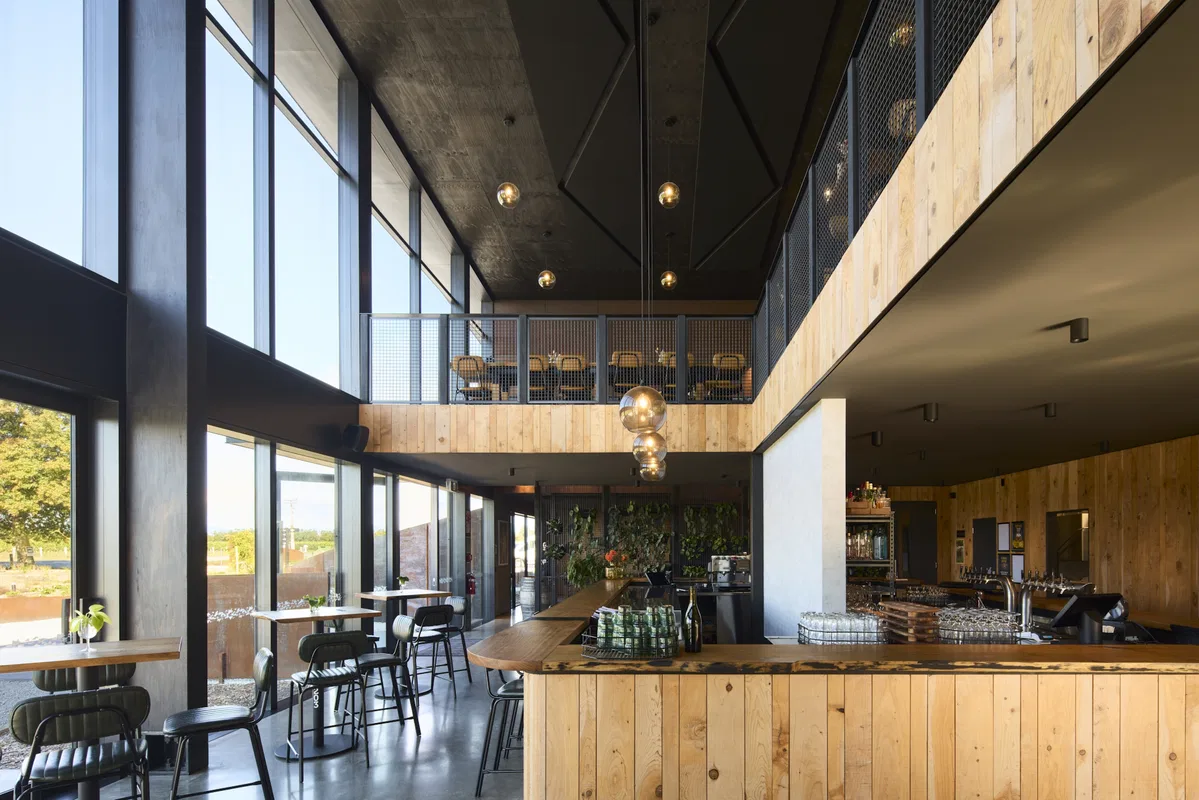
Marlborough Vintner's Winery
Located in Blenheim, Marlborough
Vintners Winery is a contract wine-making
facility providing wine-making
services which utilise cutting-edge
technology with an emphasis on sustainable
practices.
Completed December 2022, the new
376m² (GFA) building comprises a cellar
door providing space for eight to 10
vineyards, restaurant, brewery, tap room,
laboratories, and offices along with
private dining and conference facilities.
Use of natural materials and sustainable
design principles were emphasised
throughout the design, with low carbon,
mass-timber used extensively throughout;
prefabricated using Potius™ engineered
roof, walls and flooring panels,
and TimberLab LVL portals. Temperature
is regulated through thermal gain and
underfloor heating of the concrete slab,
and cross ventilation and overhangs for
shading in hotter months.
For the interior, Himalayan cedar panelling
from timber felled on the owner’s
property, tables are from live-edge
flitches of gum, and sheet boarding is
painted with paint incorporating iron
filings produce a rusted earth effect.
Outside, the landscaping references
the surrounding land, with curves
formed in corten steel referencing the
braided rivers
Vintners Winery is a contract wine-making
facility providing wine-making
services which utilise cutting-edge
technology with an emphasis on sustainable
practices.
Completed December 2022, the new
376m² (GFA) building comprises a cellar
door providing space for eight to 10
vineyards, restaurant, brewery, tap room,
laboratories, and offices along with
private dining and conference facilities.
Use of natural materials and sustainable
design principles were emphasised
throughout the design, with low carbon,
mass-timber used extensively throughout;
prefabricated using Potius™ engineered
roof, walls and flooring panels,
and TimberLab LVL portals. Temperature
is regulated through thermal gain and
underfloor heating of the concrete slab,
and cross ventilation and overhangs for
shading in hotter months.
For the interior, Himalayan cedar panelling
from timber felled on the owner’s
property, tables are from live-edge
flitches of gum, and sheet boarding is
painted with paint incorporating iron
filings produce a rusted earth effect.
Outside, the landscaping references
the surrounding land, with curves
formed in corten steel referencing the
braided rivers
Year of Completition
2022
Type
Commercial, Hospitality, Interiors
Role
Interior Designer
In Association With











Join our newsletter